Monday, 13 February 2023

Fear and trembling (part 2)

Max Colson/Church of England

And so, now that I've had time to reflect, what are my conclusions? Have my views shifted at all?

I suppose to be truthful they have moved. With 28 amendments, nearly all of them debated, as you can imagine, there were a lot of speeches. Sadly there's no Hansard for General Synod and so these are my aging recollections. The one speech which might have reversed my view came from a chap called Ed Shaw, a "pastor" from Bristol, who seemed to me to demonstrate the most loving approach from an opponent to the Bishops' motion. He talked about seeking to find common ground between those who want to bless same-sex couples and those who decry it on the grounds that it goes against the Bible's and the Church's historic teaching that marriage is between one man and one woman. He seemed to me to have a more positive tone than the more anecdotal or aggressive speeches of others in the debate. Unlike others whose hidden agenda seemed to be itching for a church in their own image he appeared to want a practical way to keep the Church together - which was what Jesus Christ prayed for before his crucifixion. That must surely be the priority for any who claim to follow him.

A speech which educated me came from an historian turned vicar called Miranda Threlfall-Holmes on the Thursday who effectively questioned the received wisdom that the church has always had one fixed idea of marriage. She outlined how the doctrine of marriage had developed over the years, for example the idea of consent ("I will", "I do") was a reform introduced to counter the practice of political alliances (including child-marriages). The Church, I learned, has not consistently taught for 2000 years that sex outside of marriage is a sin, and discussions about marriage have largely not been about sex, but about power. She suggested that the development of doctrine was a work of the truth-revealing Holy Spirit - which seemed to me to make sense. 

However the speech which moved and impressed me most came from Anderson Jeremiah, who describes himself as a Dalit Christian, who was ordained in the Church of South India and now lectures in Lancaster University. He was answering an amendment asking the Bishops to show more of their theological rationale before any decision was taken. If Ed Shaw's speech was a plea to be heard, and Miranda Threlfall-Holmes' a setting of the historical record straight, Dr Jeremiah's was a theological sermon. I looked it up on YouTube to see how it began and once again I was struck by its prophetic perspective: "Last Sunday I stood in the pulpit and preached a sermon on Isaiah 58. What is the meaning of true fasting, if not to address the yokes and systems of oppression right before our lives? Isaiah reminded his listeners then, and now, that we are people of exodus and that there is an ethical demand that we practise liberation and justice. I didn't tell my congregation, 'I haven't made up my theological mind yet, so please wait. I'll go and prepare a theological statement and I'll come back and preach a sermon on Isaiah 58.' Personal piety has a necessary public liberatory impulse. We as Christians, living in that prophetic tradition, are called to inhabit that intersection, to proclaim new life rooted in love, mercy and justice; to repair the breach and restore life. People in the journey, in Exodus, didn't wait for a theological rationale; they encountered God where they were. Now I readily agree with Dr Paul,... that yes, of course there needs to be a lot more theological rationale. For instance, in the entire document, the word 'justice' is missing. Somehow the fundamental Christian commitment to pursue equity, righteousness and mercy was missing. I understand that. 

"But I appreciate the desire of the House of Bishops to actually get into action what's required right now. And that's why that commitment which has come from the House of Bishops to act now will be delayed if we go back again to thousands and thousands of years of theological writing on this matter. We all know from this discussion surrounding this process, it has been divisive; it has not been convivial. This brings me back to our focus: of justice. For too long, in the name of doing theology, we have allowed misogyny, racism, slavery, patriarchy, because there was not enough of a settled theological understanding, while people suffered. We can't do that. And that is why I resist this amendment, because we do need to act now - and do theology as we pursue justice in our lives. We can't separate pursuit of justice here and now, and do theology later. The God who meets us in Jesus said, 'The sabbath was made for man, not man for the sabbath.' Jesus standing in that prophetic tradition calls us to act now, not wait for a theological rationale. Therefore I resist this amendment and accept the steps that are taken by the House of Bishops and move towards pursuing justice while doing theology - because as a theological educator there are different ways of doing theology; there's a practical theology and a political theology, and you can do theology while doing what's required. Thank you." 

Put simply, you don't put off pursuing justice on the grounds that you're still discussing the theory. Is slavery ever just? Is discriminating against people of other races ever right? Is it ever just to disadvantage disabled people like me? Is it just or equitable to refuse to bless committed couples whatever their sex? These are all historical yokes of oppression which we are clearly bound to lift and break.

Dr Jeremiah, appropriately and significantly a voice from the global south, was the most prophetic voice for me. And so after eight hours of listening and thinking, my admiration for the Bishops was augmented and my view that blessing same-sex marriage is something that the Church must countenance was strengthened, although as Justin Welby humbly said in his speech, "Each of us will answer to God at the judgement for our decisions on this matter. We are personally responsible. I am supporting these resources, not, I think, because I am controlled by culture but because of scripture, tradition and reason evidenced in the vast work done over the last six years so ably by so many. I may be wrong, of course I may, but I cannot duck the issue...". Amen to that.


Saturday, 11 February 2023

Fear and trembling (part 1)

It was with a certain amount of trepidation that I started to watch the Wednesday afternoon's debate on prayers of blessing for same-sex partners in the Church of England's General Synod. What an arcane process! One wonders what mind devised such a weird institution to decide church affairs. What a depressing watch! So much distrust in a Christian community.

Apparently the Synod has powers to legislate in church matters devolved by Parliament - which might explain the convolutions and the politicking of speakers. It seemed an unholy spectacle of power-playing. Occasionally I had glimpses of what resonated to me as good theology. Mostly there were unsubstantiated assumptions, stated as unquestionable truths, for example that marriage always has been exclusively between one man and woman, that sex before marriage has always been regarded as wrong.

It turned out that my trepidation was justified. The members got tired and the debate extended to Thursday morning, and after 28 amendments and eight hours' discussion a vote on the motion (amended) was taken and narrowly won. The star of the show was undoubtedly Geoffrey Tattersall KC who gracefully chaired the whole thing and stuck to the standing orders much to the irritation of those who wanted to gun for the Bishops. Second to him was the Bishop of London, and formerly Chief Nursing Officer of England, Sarah Mullally. It was her job to answer every amendment which she did with reason and calmness. I was saddened by the refusal of many to trust her integrity and that of others.

There was, it seemed to me, a concerted effort by the procedural device of amendments to delay or thwart the Bishops' proposals. I had the sense of a flexing of muscles by some influential and well-endowed parts of the Church to have their own way. Well, I suppose that's the nature of democracy, but I'm not sure it's the way of Christ. There was talk of the sanctity of truth. However, I'm not sure whether it wasn't the old Hellenistic and Enlightenment view of truth, i.e. propositional reason, rather than the Christian view, that truth is relational. Hence faith and love are relational, not credal. 

Whether the Bishops will be given the grace to find what a friend describes as the way of "reconciliation – how to live with people one can’t bear – starting from oneself sometimes" remains to be seen. People of goodwill will pray so.

Monday, 30 January 2023

Smothered by security blankets

Yesterday I listened to Sunday Worship on BBC Radio 4. It was marking Holocaust Memorial weekend and came from the West London Synagogue. The service remembered not only the Nazi genocide of Jews in the 1940s, but also the genocide of Armenians early in the century, of Rwandans in the 1990s, of Bosnian Muslims in Sebrenica, the repression of Uyghur Muslims in China today. The final reading was what most struck me. It was from Heinz Heger’s book – The Pink Triangle: The True Life-and-Death Story of Homosexuals in the Nazi Death Camps. I had known about the Nazis making Jews wear yellow stars. I'd not known about how they used triangles in concentration camps: with yellow triangles for Jews, brown for Roma, and pink for homosexual men (see Wikipedia) "Jews, gypsies and homosexuals were the prisoners who suffered most frequently and severely the tortures and blows of the SS and the Kapos. They were described as the scum of humanity who had no right to live on German soil and should be exterminated. But the lowest of the low in this scum were we, the men with the pink triangle. May they never be forgotten, these multitude of dead, our anonymous immortal martyrs" (based on the account of Josef Kohout, a Holocaust survivor).

Today I'm remembering my best friend from university. He was gay. He died a few weeks ago. He was a lovely and talented man, and a man of faith. He was never allowed to be married to the man he loved by the Church he served. And he still wouldn't have been - in spite of there recently having been a much trumpeted report from our bishops and archbishops. It was seen as a step forward - as indeed it was in that it proposed prayers of blessing for all committed partnerships including after same-sex civil marriages. It also was accompanied by a forthright apology: "“We have not loved you as God loves you, and that is profoundly wrong. We affirm, publicly and unequivocally, that LGBTQI+ people are welcome and valued: we are all children of God.” 

Linus, www.peanuts.com
Personally I was disappointed by the compromise, although I of course understand the awkward place in which the bishops found themselves, on the tightrope between literalists and liberals, and between the global north and south. I seem to remember Pope Francis once talking about how important it was for churches to be appropriate to their local societies. I can't find the quote but I think he wasn't arguing for moral relativism, just stating the obvious that science alters our understanding of the world. However it takes time for that understanding to spread. Yet in my search I came upon this resonant quotation: "I prefer a church which is bruised, hurting and dirty because it has been out on the streets, rather than a church which is unhealthy from being confined and from clinging to its own security." It seems to me that the Church of England is too anxious to cling to its own security. It's common for a child to have a crisis when her/his security blanket has worn out to a mere scrap of a rag.

The House of Bishops (their collective title) were between a rock and a hard place. I'm not sure whether their collective response isn't a fudge. If so, it's par for the course for the CofE. "There are some among us who will be perturbed because they believe that these developments do not reflect the way of Christ as they understand it. Some will see these developments as steps along a continuing journey. Some will feel we have gone too far. Some will feel we have not gone far enough." A fair summing up, but the trouble with fudge is that it's not sustaining in the long term. And someone pointed out that an apology only rings true when you stop the hurt you're inflicting. It's time we repented fully of our part in anti-Gayism, which found its ugly flowering in the concentration camps. So I hope our church resumes the journey towards equal marriage pretty quick before we get bogged down in the mud for another six years.  

Tuesday, 8 November 2022

Reaping the whirlwind

During Liz Truss’s ill-fated premiership, anxious to build on Boris Johnson’s Ukraine-bolstered popularity, Ben Wallace, the UK Defence Secretary, was sent to the United States to discuss with his American counterpart. We were told this was because of the villainous Vladimir Putin and the "very real" threat of his launching a dirty bomb attack on Ukraine. Of course Mr Putin denied this - but then, as we have been discovering here, politicians have a habit of lying in order to save their skins. Well, no doubt, our intelligence services know what they’re talking about - inasmuch as we’re allowed to hear.

Of course, we won’t learn the truth for many years. However there is an irony here. And that is that these foul weapons, which combine conventional and atomic elements, had their origins in our own country. I’m listening to the BBC Radio 4 series “Fallout: Living in the Shadow of the Bomb” at the moment. What a disastrous story! It’s an account of the British nuclear bomb testing after 1952, in Australia and the Pacific Ocean. I learned what I didn’t know before: that it was two scientists in Birmingham University (which even has a blue plaque to commemorate the event) who first wrote about the possibility of airborne nuclear fission and it was Winston Churchill and the UK wartime government who started an atomic weapons project, codenamed Tube Alloys, before the Manhattan Project in the USA. In fact it was we who shared the technology with them, and German and Soviet spies who disseminated it to their respective powers. Talk about reaping the whirlwind!


But then it has always been thus. We discover a new super-weapon, such as the rifle, and we destroy indigenous nations and take their ancestral lands; or chemical and biological weapons and are appalled when they’re employed by dictators. We develop sophisticated landmines and then weep crocodile tears when thousands of children have limbs blown off. Drones were developed in the UK and the USA and used by Germany in the war, and now they are devastating our ally, Ukraine.

As we approach Remembrance Day, in my view it’s vital that we recognise our complicity in this horrific trade and how central the military-industrial complex is in our economy. In his two-part essay, Re-remembering War Alan Storkey writes: “The Military-Industrial Complexes of the World need wars and generate wars. Accumulating arms causes wars and did in 1914. Most modern wars do not have a big disputed reason, but start because the military and the arms sellers need wars for their business. The military-industrial complex, allied to its politicians, cause wars and rumours of wars.” And he quotes Lord Grey: “The person who knew the build up to World War One most thoroughly was Lord Grey, British Foreign Secretary for the preceding decade. He said: ‘The moral is obvious; it is that great armaments lead inevitably to war. If there are armaments on one side, there must be armaments on other sides.. The increase in armaments that in each nation is intended to produce consciousness of strength and a sense of security, do not produce these effects. On the contrary, it produces a consciousness of the strength of other nations and a sense of fear. Fear begets suspicion and distrust and evil imaginings of all sorts…The enormous growth of armaments in Europe, the sense of insecurity and fear caused by them – it was these that made war inevitable. This, it seems to me, is the truest reading of history, and the lesson that the present should be learning from the past in the interests of future peace, the warning to be handed on to those who come after us.’"

As Storkey comments, "There were many other witnesses to the same truth, as we shall see. ARMS CAUSE WARS.” Both developing weaponry and deploying it are pernicious human activities, and we should be more than sad as this weekend we contemplate their effects. Surely we should pressure our politicians actively to resist the siren calls of the arms industry with their well-paid lobbyists and a light grasp of morality? And pledge ourselves actively to seek peace? Or as the Peace Pledge Union has it, "Remember and disarm".

There's a prayer for Remembrance Sunday which goes: "God, our refuge and strength, bring near the day when wars shall cease and poverty and pain shall end, that the earth may know the peace of heaven, through Jesus Christ our Lord. Amen." With due respect to the writer of the prayer, I reckon it isn't just the Almighty's job to work for peace.

Wednesday, 6 April 2022

Channel 4 and Cadbury's

 On Monday Channel 4's Dispatches programme focused on the operations of Mondelez in Ghana. You might be forgiven for asking, 'And who or what is Mondelez?' It's Mondelez International, one of the two foreign companies which eventually gobbled up our pioneering ethically inspired chocolate industry - consisting of the three Quaker founded firms of Fry's from Bristol, Cadbury's from Birmingham and Rowntree's from York. The first two are now part of Mondelez (annual profits £3.3bn), and Rowntree's part of Nestlés (annual profits £13.8bn). 

From Channel 4 programme

 In the programme, 'Cadbury Exposed', Antony Barnett visited the farms which supply Mondelez, i.e. Cadbury, with the cocoa, some of which goes into Cadbury's Creme Eggs and Dairy Milk bars. Mondelez claims to be an ethical producer. 'MondelÄ“z, which made global profits last year of more than £3.3bn, has a sustainability programme, Cocoa Life. Its logo is marked on its products, including Cadbury Dairy Milk, and its website states: “No amount of child labour in the cocoa supply chain should be acceptable”' (Observer, 2nd April 2022).

From Channel 4 programme

In fact the cocoa farmers are forced to use child workers as young as ten, as they themselves are paid only £2 a day and therefore cannot afford to hire adult workers. And this by a company that makes a profit of £3.3,000,000,000 a year. I think the most effective way to make Cadbury's (aka Mondelez) live up to their Cocoa Life claim by paying their farmers a fair rate would be to boycott their products and buy truly fairly traded chocolates - which can bought on the high street from the cheapest to the poshest shops. See https://www.fairtrade.org.uk/media-centre/blog/15-fairtrade-chocolate-choices-you-can-find-on-the-high-street/. My favourite local coffee shop also supplies The Real Easter Egg products. I gather commercial firms mind a bit when their custom drops.

On the same day as the programme the government announced its plans to sell off the admirable Channel 4. The reason it wants to is opaque. Although publicly owned, it costs us and the government nothing as it's financed by advertising. The Secretary of State says it needs to compete with the 'new online platforms' like Netflix. That it can't is far from obvious. It seems to have very creative staff, producing programmes of variety and independence. I wonder if I'm alone in wondering whether the latter is the real motive for privatization - as well as the cash it would contribute a welcome boost to the stressed coffers of the Exchequer. I for one can't see a commercial tv company wanting to commission such investigative programmes or encouraging the probing interviews which are the hallmark of Channel 4 news. Perhaps the real reason for the government's vendetta against Channel 4 is the discomfort that ministers often experience at the hands of interviewers - or avoid.

Saturday, 5 March 2022

A Word for the Day

We read Reflections for Daily Prayer most days. Today's, by Philip North, Bishop of Burnley, was particularly apt. As my wife commented, "I don't suppose he had any idea how appropriate it would be when he wrote it." Could Putin be a contemporary Pharaoh? I wonder.


"We live in a world in which the colossal global strongholds of political power, military might and corporate dominance seem all pervasive - a world in which the gentle teaching of a roving preacher who lived 2,000 years ago in Galilee can so swiftly be drowned out or perceived as irrelevant.                                                                                         "But just as mighty Pharaoh needed the jailbird, so even the powers of the twenty-first century need with all their hearts the man nailed to the cross."

Thursday, 3 March 2022

Ash Wednesday - Confession

I was wrong.

Those who know me well will know that I have a soft spot for Russia. I enjoy Russian literature and its music and art. I have a relative whose husband's forebears left the Soviet Union shortly after the Revolution and I have a good friend who was born in St Petersburg and visits her family there. I felt sure that the Russian/Byelorussian military "exercises" which were interpreted as sinister by Western governments were no more sinister than those which NATO regularly carries out in Eastern European countries - ie. merely defensive. Even ten days ago, I couldn't believe that anyone would be so stupid or misguided as potentially to start a war in Europe. But I was wrong. One man was.

My grasp of East European politics and history, in particular that Ukraine could not rely on NATO protection if attacked, was woefully lacking. Mr Putin clearly realised that attacking Ukraine would elicit no military response from its so-called Western friends and presumably assumed that a weaker Ukraine would crumble before the might of the Russian military machine. But apparently it hasn't. Whether there are Russian-speaking Ukrainians in the south and east who welcome his invasion ("special operations", or "peace-keeping operation") we can't know, because we won't be told. It's clear however that there is an heroic unity among the Ukrainian people and a desire to be sovereign and independent. One irony of the invasion is that its effect so far has been the opposite of the objective. It's pushed Ukraine westwards rather than eastwards. I can't imagine it ever being a willing satellite state of the Kremlin after this, even if a Putin puppet government were to be installed.

Among the many shocking pictures of the war, tanks and armoured vehicles, shattered buildings, frightened refugees packing railway stations, families sheltering in bunkers, cellars and underground car-packs, one which chilled and shocked me almost more than them all was footage (which I assume was contemporaneous and posed) of Vladimir Putin kissing an icon, crossing himself, and lighting a candle. At about the same time he had put his nuclear forces on high alert. "What sort of man is this?" I wondered.

A few years ago an artist friend gave me a print of an icon she had painted at the Bethlehem Icon Centre. It's of St Michael (of angel fame). I'm not in the habit of kissing it; but it has a certain poignancy at the moment, as an early news report of the invasion was filmed overlooking St Michael's Cathedral in Kyiv (one of the city's many cathedrals). Ironically this beautiful Byzantine building was destroyed by the Bolsheviks between 1934 and 1936, but magnificently rebuilt and restored around the turn of this century. Now it's at the heart of the Russian assault on the city.


My friend from St Petersburg once gave me Anna Reid's horrifying account of that city's siege by the Nazis from 1941 to 1944, in which a quarter of the citizens died of starvation in the first year: Leningrad. The horrors of those years, just ten years before Vladimir Putin himself was born there, exceed anything we in Britain experienced or have cared to contemplate.

So how, I wonder, can he even contemplate investing Ukrainian cities and forcing them to similar straits? Ukrainians after all suffered just as terrible atrocities in World War 2 as their Russian brothers and sisters, such as the massacre of 33,771 Jews in two days at the Babyn Yar ravine in Kyiv.

I've this afternoon heard of a family whose sons had been conscripted, one into the Ukrainian army and the other into the Russian army.

As a Christian I am perplexed. I believe that we're all made "in the image of God" (imago Dei), in other words that there's a core of goodness in each person. I also know, and it's transparently clear, that we're all flawed and fail short of even our own hopes of goodness. When I blogged about Leningrad, I wrote: "I find I’m tired of politicians indulging in the rhetoric of suspicion and fear to justify spending on the arms trade. I do realise that Hitler was an exceptional evil, and that there have been and are others like him who need resisting. It’s a complex world. We need a transformation of human nature, transformed by love."

I suppose one thing I learned as a teacher is that if you tell a child they're bad or hopeless they're likely to believe you and fulfil your low expectations. You may criticise or condemn their actions or omissions, but when you condemn their character you kill some of their humanity. Another thing I learned is you should never sanction a whole group for the misdemeanours of an individual. It is counter-productive and teaches a faulty view of fairness and therefore of justice. 

In my view Vladimir Putin is as human as the rest of us. No doubt there are others, even among our allies, who have committed dreadful crimes as well. However his actions in Ukraine are exceptionally evil, even if there's a rationale of fear behind them. We must nevertheless resist evil specifically and not generally.

“Jesus, Lamb of God, have mercy on us.
Jesus, bearer of our sins, have mercy on us.
Jesus, redeemer of the world, grant us peace.”  

AFTERWORD

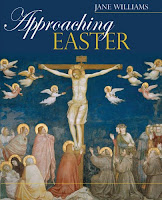
I've just begun to read for Lent Jane Williams' Approaching Easter. In her preface she writes: "The history of how and why Jesus died on the cross is at least partly an analysis of what we all do to one another when we are controlled by fear, or greed, or love of power, or too much love of ourselves. At every turn, Jesus challenges us to be brave enough to step out of our self-made prisons and turn towards the source of life and freedom, which he calls God. Unfortunately, too many of us don't see fear, greed, love of power, and love of ourselves as prisons. We see these emotions as necessary to grab what we think we need for our own security; we might even be prepared to kill for them, just as people 2,000 years ago were prepared to kill Jesus rather than hear his challenge." I suspect that, as I continue to read, I'll discover that Putin is not alone in a prison of fear, greed, love of power, or too much love of self. I may be there too.