Showing posts with label Vicky Beeching. Show all posts

Wednesday, 27 June 2018

Undivided by Vicky Beeching


“Don’t give us any spoilers,” one of my friends warned me today when I told her I was intending to review Undivided by Vicky Beeching. So I shall try not to.

One of the classic errors when writing about a book is confuse its genre, for example to treat fiction as though it’s a work of history. Of course Pride and Prejudice has a historical context, but it’s not a historical chronicle. So we need to avoid judging a book by what it’s not claiming to be. Such is the mistake made by the one hostile review I’ve been sent. Vicky Beeching, both in her Preface and Final Disclaimers, makes clear what she is writing. “This is not a theology book or an academic essay; it’s a memoir.” It is a category mistake to regard it as polemic or political. It is a personal memoir. It’s a contemporary story of one very gifted and prominent young musician struggling with her sexuality in an antagonistic culture. In effect, she simply says, "This is how it was for me."

So how does Undivided do as a memoir? For me it was eye-opening and harrowing. Although I’ve met Vicky once, I had no idea of the pilgrim’s progress she had been through. Now I understand a bit more. She is extraordinarily honest about her life, her thoughts and her faith – something which lies at the heart of her being.

In her early teens, Vicky realised that she was gay. For her it immediately created a conflict because at an even younger age she had committed herself to faith in Jesus Christ, and the evangelical culture in which she was brought up considered the two incompatible. One could not be gay and a Christian. And so for the next twenty years of her life, living in the heart of that particular Christian world, she struggled to be free of her nature and was constantly in fear of her orientation being uncovered. That struggle led to despair, many tears and the point of suicide.

Having myself grown into a similar world, I recognised the situations that she describes as true to life, from youth camps, to inappropriate use of the Bible, to double standards, and courageous stands. I also recognise the honesty of internal questioning and doubting to which she admits. It’s clear that her sexuality is not a result of nurture. Her family and her heroes of faith are staunchly conventional in their teaching on the matter. Her sister is straight. She grows up wishing she was too.

The reason that Vicky’s story captured the headlines like no other is that she was arguably the most popular female song-writer and worship leader of the noughties on both sides of the Atlantic, and in the US the Christian music business is a multi-million dollar concern. Educated in theology at Wycliffe, the evangelical hall in Oxford, her musical gift gained an added theological depth, so that when she went to the States in her early twenties her talent was recognised and she was soon signed up by EMI. She was in demand in mega-churches and on radio stations across the country. Her tour schedule was gruelling, much of it in the southern Bible Belt, where there was particular antipathy to the LGBTQ+ movement. As is now well known, it was her physical health that put a stop to her stellar life as a Christian song-writer and performer, and brought her back to England for urgent treatment on the National Health Service.

Having admitted to herself that she needed to come out in order to become whole and live free from shame, Vicky then went through a rigorous study of the Bible, which remained the foundation of her faith, in order to see whether she had come to the wrong conclusion. She highlights two occasions, in Brompton Oratory and St Paul’s Cathedral, which lead her to the conclusion that she was right. “God was letting me in on a new perspective, one of radical acceptance and inclusion. ‘Do not call unclean what I have made clean’ echoed round my head and heart. The person I’d always been – a gay person – was not something to be ashamed of. God accepted me and loved me, and my orientation was part of his grand design.”

In the final section, “Into the Unknown”, Vicky writes about her interview with Patrick Strudwick which was published in The Independent newspaper in August 2014, and grabbed the headlines worldwide within 24 hours. Read it here. The fall-out from her admitting that she was gay beggared belief and, I am deeply sorry, reflected very sadly on the Christian community to which I belong and which she still calls hers. It extended far beyond disagreement into contumely, condemnation and threats. Practically her music was widely boycotted and engagements cancelled or not renewed, drying up her income stream and threatening her livelihood.

When she was a child, Vicky’s ambition was to be a missionary like her much loved grandparents. If there is any happy ending to this gritty book, it must be that she is now representing faith in unlikely places, most of all in the LGBTQ+ community, where her Christian faith in the face of all odds is recognised and given a voice.

So, who should read Undivided, and why?
First, let’s start with people like me: straight Christians, brought up to be suspicious or judgmental about homosexuality. It gave me vivid insight into really what it is to be differently orientated in a still intolerant community. The book is dedicated “to the memory of Lizzie Lowe, a fourteen-year-old British girl who tragically took her own life in 2014 because she feared telling her Christian community that she was gay”. It’s almost impossible to grasp the nature and power of that fear until you read a memoir as well-written as this.

Secondly, gay Christians should read it, especially if you’re young. You will find you’re not alone, and that it’s possible to be gay and Christian, and have as full and fulfilled a life as anyone else. In fact, it would be so for any gay person no matter of what faith.

Thirdly, everyone should read it, wherever you stand. It is an honest insight into authentic living. It is a moving account of a hard-won liberation from fear and shame. And it's a good read.

I suspect there are many young people worldwide who are in a similar situation to Vicky’s. What she has given us, by virtue of her former popularity in the Anglophone world, is a view through a magnifying glass of their experience. We may make of it what we will. We may embrace it and support their freedom. We may dismiss it and resist any change. We may simply choose to take note of it. What we may not do is ignore it. I'm reminded of Martin Luther's apologia, "Here I stand. I can do no other." Please read it from beginning to end. Thank you, Vicky Beeching.

PS I still think The Wonder of the Cross is one of the greatest worship songs ever! How truly tragic that Vicky is no longer considered as acceptable in worship.

Thursday, 26 October 2017

MND matters


Quite a full seven days to do with MND inter al for us. 

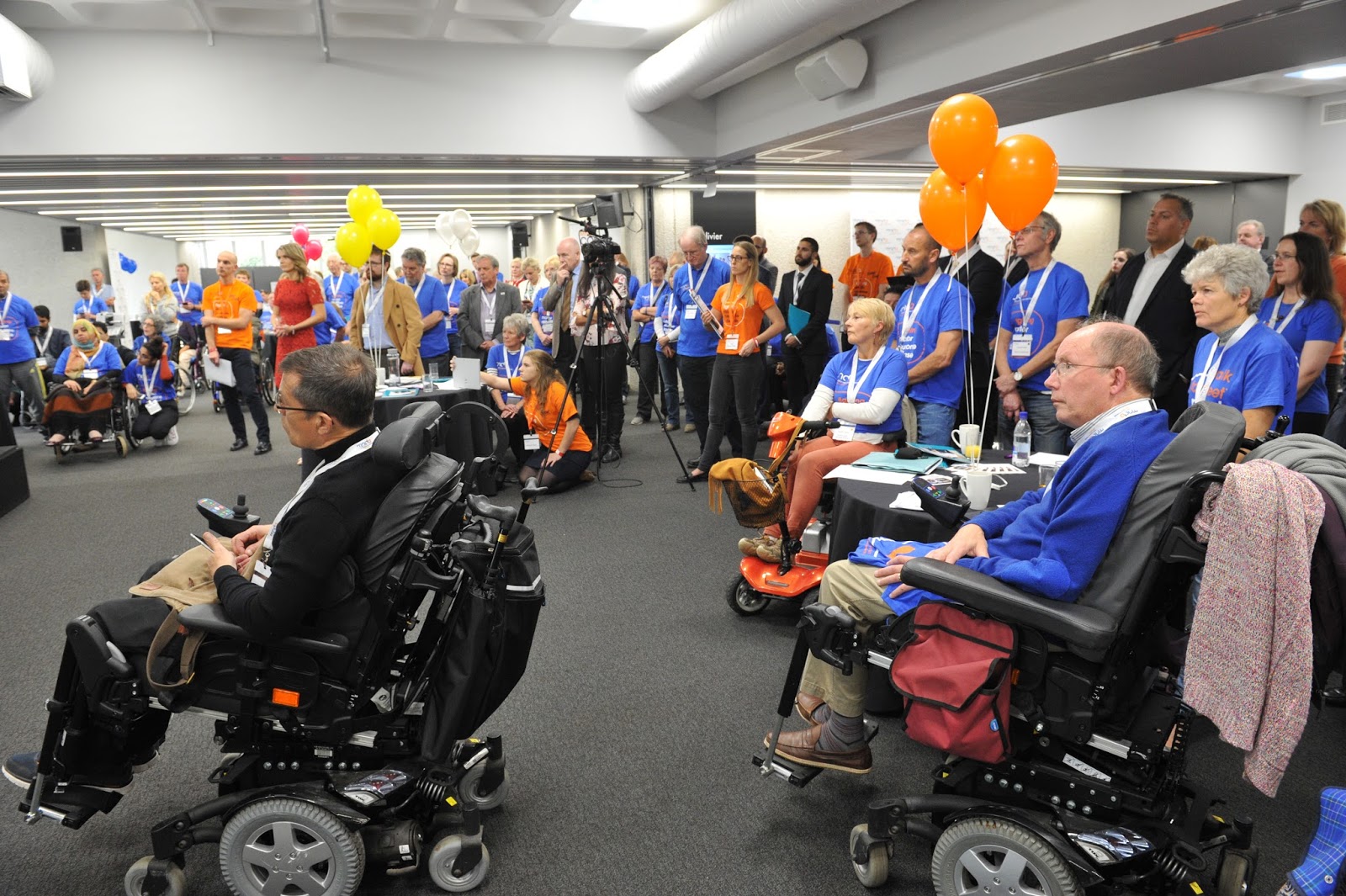
We drove to London on 16th under a red sun and a livid sky. It was weirdly beautiful. That evening we shared a great mixed meze at Galata Pera (http://www.galatapera.co.uk/), a Turkish restaurant by the river in Brentford, with a long-standing friend. It was the best meal I’ve enjoyed in London (except the one cooked for me by my then girl-friend many years ago!). The next morning we made our way to the QEII Centre in Westminster where there was to be an APPG (All Party Parliamentary Group) and MNDA (Motor Neurone Disease Association) Reception. But before that we shared a drink with the admirable Vicky Beeching (https://vickybeeching.com/). She is one of the bravest women I have ever met – and I have met many of them. She is gentle and strong, and full of integrity. The abuse and trolling when she came out was without understanding, compassion or excuse.
With Vicky Beeching at the QEII Centre


Then it was upstairs to the Parliamentary Reception, which was a very moving experience. The sandwiches were nice, but the meat of the event were the keynote speeches and the conversations with MPs. The speeches were given by Chris Evans MP who is an officer of the APPG on MND, Rob Owen who is living with MND, TV Presenter and MND Association Patron Charlotte Hawkins, and Penny Mordaunt MP, Minister for Disabled People, Work and Health. Undoubtedly the most impressive were those given by Rob Owen and Charlotte Hawkins.


Rob Owen talked about his experience of applying for PIP (Personal Independence Payment), the benefit granted to people with extra financial demands from ill-health and disability. In brief he was first assessed by a health professional who understood his needs. Later he was called for reassessment, which was carried out this time by a non-professional – and his monthly payment was reduced. Nonsensical since MND is an untreatable degenerative disease. When he queried it, he was again treated to an amateur tick-box assessment and had his payment removed entirely. It was only by formally appealing to a panel including a magistrate and a medic that he was given the maximum amount of PIP – backdated to the beginning. What a waste of nervous energy and taxpayers’ money!
With Charlotte Hawkins

Charlotte Hawkins talked from the point of view of family, and painted a vivid picture of watching someone you love die from MND; as she put it, seeing the person you love disappear before your eyes. Her father died in 2015. She moved us all and opened MPs’ eyes to the reality of the disease. (You can hear the speeches here: MNDA Parliamentary Reception).

With Robert Courts MP
Sadly only one of the six Oxfordshire MPs came to the reception. Indeed although I had sent a personal invitation to my local MP, I did not receive so much as an apology – simply a proforma bit of party-political spiel about how much the government cares about conditions like MND… a week after the event. You might tell I’m not overly impressed! However, at least, new MP, Robert Courts, from Witney was there, and listened and was concerned.

The focus of the reception was to inform parliamentarians both about the disease and its costs – and how important it is that people who have it receive the support they need WHEN they need it, which in the vast majority of cases is very quickly as the disease so rapidly removes your independence. And of course how unnecessary reassessment is with a progressive degenerative disease, assuming it’s been correctly carried out in the first place.

And so back home – and this week. On Tuesday Jane forewent her usual gym class so that we could attend my fourth and final meeting of the Oxford MND Care Centre Steering Group. I’ve been the patient representative. I’ve said often how excellent the Centre here is. We have two top-rate consultants (who happen also to be professors), a specialist nurse (who coordinates the show), an OT (who is the country’s expert on wheelchairs for neurological patients) plus access to specialist physios and respiratory nurses. The local MNDA branch also supplies volunteers who welcome you and make sure you know what’s going on and who to see when. Part of the meeting was devoted to an audit which, I think, the Centre has to do in order to continue to be recognised (and supported) by the MNDA. There’s a danger, it seems to me, of extending the already pervasive evil culture of performance indicators. The Oxford Centre is always working at improving and being responsive to patients’ needs. It doesn’t need to waste its health professionals’ time in filling out tick boxes and sending out questionnaires.

The Association faces the understandable dilemma of not wanting to fund what should be statutory provisions, such as nurses or dieticians, and yet there are charities which successfully augment the NHS – such as Macmillan Care, Marie Curie and many others. The MNDA is comparatively well supported with an income of £17,391,000 in the 11 months up to December last year. The staff (189 of them) cost £6,268,000, for whom private medical insurance (!) was £43,000. I wonder if they could fund some hospice beds or nursing home rooms – or even adapted holiday places. Don’t get me wrong; the MNDA is a very effective charity and does a great deal of good for us, particularly at the local level. I wonder if it just might be a tad top-heavy.

Tuesday, 15 April 2014

Love unknown

Well, it’s been quite an eventful ten days or so.  However I’ll concentrate on just one theme that occupied me which is the one about which I blogged before we went away for a few days.
On Friday (4th) we were due to be celebrating with our friends Esther and Julie their wedding. So it was somehow bitter-sweet to hear Justin Welby doing an hour’s phone-in on LBC Radio, answering among other things questions about gay marriage. He came across well, I thought, not least making real why it is such a hard issue for him.

The wedding celebration was an extremely happy event. The couple were in great form. One of them said to me, “It’s nice to feel normal,” and I could see what she meant.

Then we went away to Devon for a few days, staying in a cottage up a winding crumbling lane and with a blissful absence of internet. Late breakfasts, fresh fish and chips, picnics by estuaries, views from the cottage, spending time with Jane's parents.… And so after all too short a break it was back to the harsh rushing world of traffic, vehicular and cyber.

One of the first things I picked up was the news that my occasional correspondent, Vicky Beeching, who did her theological studies at the same place as me had been getting it in the neck because of her support for equal marriage. She now describes herself on Twitter as “Theologian. Religious Commentator (Sky, BBC, ITV, Radio 2, Radio 4, LBC). Pro #womenbishops  & pro #equalmarriage. Feminist. Christian. Songwriter (EMI). Geek”. It was a blog post she had written entitled My support of same-sex marriage which had incurred the wrath of many Christian readers, sadly, and ironically, since it was a personal plea for dialogue carried on in a loving spirit.
“So, while many conservative and evangelical Christians are very angry about my stand for same-sex marriage, please let’s dialogue in love. Journey with me here. I’ll be blogging about this topic, the relevant Bible passages, recommending books and resources, and writing about the various questions that arise from them all.
“Thanks to the many people who do support equal marriage and have reached out to me. I’m touched by the way you have gathered around me and rallied to encourage me at this difficult time. Thanks also to those who’ve written to say they disagree with me, but are wanting to do so with kindness and respect.
“If you want to come on this journey, whatever your beliefs may be, I’d be delighted to have you read, comment and share your responses on this site.”

Vicky derives much of her income from royalties on her songs. One consequence of her expressing her views has been churches telling her they’ll no longer use her songs, and thus she will lose a good chunk of her livelihood. I decided to write her a note:
“Hi Vicky.
“Thank you for your blog post. As others have commented, it's brave. Being retired I don't have as much to lose as you do. Being relatively obscure, I don't stand to receive the shower of vitriol that you do. However as you know I come from a similarly conservatively Christian background as yourself - and have to confess to having held what might have been regarded as a Biblically-based homophobic stance, which I now regret and of which I have repented, as I believe I should have much sooner.
“My change of mind and heart has not been an overnight conversion, but has been based on my reexamination of the 'proof-texts' (very situation-specific in all cases but one; that one a Biblical hapax legomenon [single instance] with a much debated meaning), the resounding silence of Jesus on the subject of same-sex attraction, and his resounding condemnation of judging others and his all-encompassing demand of love. It's also arisen from witnessing the harm inflicted on LGBT young people and their parents by the uncomprehending condemnation of Christians like me, and from an encounter with a couple where I had no doubt that I was to reach out, accept and love them. I had the privilege of celebrating with their friends after their marriage a week ago on Friday.
“Ironically I had listened to Archbishop Justin's phone-in on LBC Radio that same morning. And I did understand the awful dilemma that he has as a crucial leader within the Anglican worldwide church, being aware that any 'liberalisation' which might take place here would have fatal consequences to fellow Christians in other countries - as well as having the responsibility to uphold the Church's agreed teaching on marriage. I share your hope that 'as the Church of England enters a two year discussion period about “human sexuality” based around The Pilling Report,... those of us on all ‘sides’ can talk with respect and kindness, despite the deeply painful and inflammatory nature of the subject matter.' As mule-headed Oliver Cromwell said to the equally stubborn Scottish Kirk Synod, 'I beseech you, in the bowels of Christ, think it possible that you may be mistaken.' We're all of us mere humans.
“I suspect you don't need me to say that I don't believe you're a heretic, but on the contrary Valiant for Truth in the market place of Vanity Fair. And I for one will be listening to 'The Wonder of the Cross' this coming week and being grateful.”

Following my recommendation of Vicky’s article, I was contacted through Facebook by one person challenging me to justify myself: “I have just never found an even slightly convincing theological argument for its practice...” I recommended Justin Lee’s Unconditional and Renato Lings, Love Lost in Translation. I suspect Vicky’s subsequent posts on the subject will provide more theology than I’m likely to. Another friend asked me whether I had read the Rev Steve Chalke’s article on the subject – which I had, and did again. I replied, “Yes, I have read it. It's so sad that Christians divide so heatedly over the issue. As I mentioned in my blog, knowing parents of gay children and having friends who are gay has made me think that the received attitude to homosexuality is pastorally misconceived and harmful - unloving and unChristlike. I suspect I'm like Steve Chalke in that. There are more struggling young gay Christians than churches like to acknowledge and consequently they feel they either have to conceal their sexuality or leave the ordinary fellowship of church.”

In her reply she agreed and recounted how one of her friends at university left the church when she realised that she was gay. She had prayed so hard that her feelings would be taken away from her. “I also am concerned that Christians appear to the outside world to be unloving bigots. I am so conscious of how the church is viewed by many of my colleagues - and it is not good!”
The stance which has caused more than “one of these little ones to fall” seems to me highly perilous and to require re-examination. I have previously said that I do not like Government redefining language by dictat – that is acting ultra vires in my opinion – but I do also like the Church supporting faithful loving commitment. Perhaps we need to accept that we live in an imperfect and broken world, and do what we can to work for the reconciliation between person and person and between people and God, which is why we call this Friday Good.

Have a listen to this: "The wonder of the Cross". I think it’s up there with “When I survey” and “There is a green hill”.

Thursday, 9 February 2012

Men behaving badly

Why are Englishmen so awful at personnel management? How is it possible for the FA board not to have consulted their highly-paid team coach before making a team decision as crucial as removing the captaincy from John Terry? It beggars belief.

The FA Chairman, David Bernstein
Whatever the rights and wrongs of Terry retaining the captaincy - and you can argue either way with some reason - it's plain as a pikestaff that to fail to consult Fabio Capello, his boss, beforehand, was plain insulting and bad management. It leaves me wondering how much a free hand he'd ever been allowed. It was convenient to pin the World Cup blame on to him. Since then, however, he seemed to have created a successful and promising team with prospects for Euro 2012. But the point is that if you employ a man at an annual salary of £6 million, the least you can do is afford him the respect to do his job.

Fabio Capello
It's not surprising if Capello had been hopping mad to have heard the FA's decision post facto. He must have felt he was up against the Mafia. Even more so, when he was expected to keep silent. When he spoke up, the Mafia would have shot him; the FA fired him. He was a strange creature in their world - a man of principle, a manager who expected his team to maintain standards, someone who said it as he saw it, someone who actually believed in "innocent until proved guilty". What a surprise, when a man of such eminence in the football world, said, "I'm sorry. I manage this team. That's what you pay me for. I make the operational decisions. You can advise. I decide"! And don't tell me he resigned! He was pushed - probably by being told, "Like it or lump it, Fabio. We've decided."

It's not the only example I've come across of what can only be described as crass personnel relations in organisations. Somehow managers regularly miss the blindingly obvious in how to treat their employees. Perhaps it's an aspect of their ambition that has pushed them up the ladder. You tend not to look at the fingers you're treading on, otherwise you'd never get on and up. I wonder whether it's a particularly male thing. I think of the different headteachers under whom I served. Without doubt the best two were women. Outstanding was Sister St James, a splendid upright fireball of a nun, who had brought an all-girls' convent school to be a highly successful mixed comprehensive. She was respected by staff and students alike, and yet had time for all alike as well. The other was Freda Storrar, who'd worked in industry before returning to education to take on one of the toughest upper schools in Cowley. She too had that combination of integrity and humanity. I hate to admit it, but three of the four male heads under whom I worked were not in the same class. They weren't bad, but they weren't as good. The exception was a retired head brought out of retirement to fill in a term's gap between appointments.

In other contexts, I've seen either first-hand or through friends repeated managerial crassness, usually at arm's length: in the Health Service for example nurses expected to operate new IT systems without having been given the training and with no time allowances; coordinators told to write up their own jobs with a view to being down-graded. I could go on. I looked at the Football Association's website. There's a page which proudly proclaims The Decision Makers. It's the list of the Board members, of whom there are 12. No prizes for guessing how many are women! I believe 51% of the world's population are female. Maybe there is a Women's FA. Maybe more men than women do play football. But maybe we don't need to look any further than the Board to understand why the members are such crass "decision makers". (In case you were wondering, the answer, of course, is 0.)

I don't make a habit of agreeing with our Prime Minister, but I think he might have had a point when, talking about women in board-rooms this morning in Sweden, he said, "The evidence is that there is a positive link between women in leadership and business performance, so if we fail to unlock the potential of women in the labour market, we're not only failing those individuals, we're failing our whole economy."
Vicky Beeching


Meanwhile the Church of England General Synod, this week, returned to the vexed question of creating women bishops.... Coincidentally, I imagine, singer/song-writer, blogger and academic, Vicky Beeching, posted a blog entitled God has given Christianity a masculine feel, says John Piper. He's a well respected and popular author and preacher in America. Unsurprisingly Vicky rebuts his thesis, and set me wondering what I honestly feel. There are getting on for 100 comments following Vicky's post (mine's near the end!). I have to say I am now positively in favour of women in positions of pastoral leadership in the church. I wasn't once. My one reservation, and sadness, is that it can become a further cause of disunity within both the church (C of E) and the Church (worldwide). I'm hopeful that, with humility, it's possible to disagree but not divide.

Thursday, 24 February 2011

The Middle East, Isaiah and good worship

I realise I've apparently not been aware of the historic events taking place in the North Africa and the Middle East. My Facebook friends will know, however, that I did sign up on the Cancel the Bahrain Grand Prix group. I hardly think the 143 of us made a great impact on the decision which was quite soon made! In truth the domino succession of protests starting from Tunisia has been extraordinary to watch, and to understand. The factors of militant Islam's presence in the region and Israel in the middle are what contribute to the sense of international moment to the pictures on TV. These are not mere domestic upheavals. They could involve us all.


At the height of the protests in Cairo and with a new government in Jordan, Andrew White, vicar of Baghdad, pointed out the intriguing prophecy of Isaiah 19. 23-25: 'In that day there will be a highway from Egypt to Iraq (Assyria), and Iraq will come into Egypt, and Egypt into Iraq, and the Egyptians will worship with the Iraqis. In that day Israel will be the third with Egypt and Iraq, a blessing in the midst of the earth, whom the LORD of hosts has blessed, saying, "Blessed be Egypt my people, and Iraq the work of my hands, and Israel my inheritance."' And he commented: 'Today it is beginning to happen. We do not know what will happen next. I can only say the words at the beginning of each service the “The Lord is here and His Spirit is with us." Keep your eyes on Isaiah 19.'


Vicky Beeching 
Talking of Isaiah, I've been thinking about churches and worship recently, and I came across an interesting chapter in Micah's Challenge written by Tony Campolo. It was about Isaiah 58. He points out that worship not only reflects but also shapes theology; and he asks: "Will this new kind of worship music mould our theologies so that our religion in the years that lie ahead will be likened to that of the people of ancient Israel, devoid of social justice concerns and, therefore, unacceptable to God? Will we have worship music that has Christians... with uplifted hands singing love songs to God, while failing to 'seek justice, correct oppression, defend the fatherless, and plead for the widow?'"


There is a great YouTube clip where Vicky Beeching, who studied theology under my brother in Oxford, introduces her new worship album, Heaven Invades. I think she has it just right. Vicky Beeching talks about worship