Thursday, 15 March 2018

The Right Honourable Leader of Her Majesty’s Most Loyal Opposition


What exactly do MPs, of all parties, reckon the role of the Leader of the Opposition to be? Do they really want a supine yes-man who fails to submit government actions to critical scrutiny? Or do they want a leader who is not afraid to ask those in power the awkward questions which remain unanswered?

Whatever the truth of the Salisbury affair, we as the public certainly have been given no more proof that the attack on Sergei and Yulia Skripal was authorised by the Kremlin than circumstantial evidence, such as that Skripal was a Russian spy and a British double agent, that the fourth generation nerve agent used, generically known as Novichok, was developed in Russia and has a Russian nickname meaning "newcomer", and we think the Russian president is a nasty piece of work. It might be summed up in Foreign Secretary Boris Johnson’s profound observation that if something "swims like a duck and quacks like a duck" it's probably a duck. “Proof” seems to add up to “you have to take our word for it,” said loudly and repeatedly. Theresa May, the Prime Minister, was more circumspect in her Commons’ statement saying merely that it was “highly likely” that the Russian state was responsible. According to our former ambassador in Uzbekhistan, Craig Murray - who is far better informed than me - it is highly unlikely that this "proof" is true. Read https://www.craigmurray.org.uk/archives/2018/03/the-novichok-story-is-indeed-another-iraqi-wmd-scam/. It is eye-opening.


Jeremy Corbyn was unflinchingly direct in his condemnation of the poisoning of the Skripals, both of the use of chemical weapons in war and on the streets. He also condemned the Putin government and its supporters for “its human rights abuses both at home and abroad”. But, much to the dislike of the government benches, he also asked some pointed technical questions, including whether they had referred the incident to the International Office for the Prevention of Chemical Weapons. A former member of that office and weapons inspector interviewed on Tuesday’s Today Programme confirmed that following a whistleblower’s revelations any “advanced” state could manufacture a chemical agent of this type. So it was also a reasonable question to ask what particularly pointed its manufacture to Russia.

Whatever the details of the Salisbury affair turn out to be, if we’re ever allowed to know them (and official secrets are a well-used governmental fig leaf), far from playing tawdry political games that proved he wouldn’t defend us (Daily Mail), Jeremy Corbyn proved himself a serious opposition leader, unafraid to do his job – subjecting the government to critical scrutiny and awkward interrogation. This was evidenced in the hostile personal attack with which the Prime Minister answered him. It is a shame that he is not receiving the support he deserves from some members of his own Parliamentary Party.

Another thing that seems to have riled the Conservatives is Mr Corbyn’s pointing out on Monday how much the Tory party has received in donations from rich Russian oligarchs now domiciled in the UK with British nationality – over £3million since 2010, and just since Mrs May took office more than £820,000. Of course they want to hold on to it. One wonders why these fabulously wealthy exiles choose to buy favour with the British ruling party.

An irony of the affair in the House of Commons is that in Russia and its predecessor, the Soviet Union, those we most admired were the dissidents, the brave people who dare to challenge accepted orthodoxy. And yet here the powers that be, political, media and plutocracy do all they can to shut his dissenting voice up. It’s perhaps no coincidence that his speech contained this comment about dissidents: “I join with many others in this house in paying tribute to the many campaigners in Russia for human rights and justice and democracy in that country.” One of those no doubt was Alexei Navalny, the hero of John Sweeney’s Panorama programme last night of which Vladimir Putin was the villain. 

Whatever the rights and wrongs of the case, we should welcome the fact that we have in Parliament an opposition leader who holds our government to account - however uncomfortable that may be.

Wednesday, 7 March 2018

The Russian affair in Salisbury


Oh, here we go again! The now traditional English sport of demonising Russians has kicked off once more. A Russian poisoned on the law-abiding streets of Britain leads to lurid headlines within hours. Russia responsible for a spy’s poisoning… we’re told. Speculation is rife. Vladimir Putin is quoted as saying that spies will never go unpunished. The deduction is made that Sergei Skripal and his daughter Yulia are victims of Kremlin vengeance.
Salisbury Cathedral

The police and security services urge caution in attributing responsibility until investigations have led somewhere, and Russia experts do the same, but still Boris Johnson, our really quite bright Foreign Secretary, described Russia as “a malign and disruptive force”. The incident gave rise to a meeting of the national emergency committee, COBRA, although it’s not clear to me at least in what way it is a “national emergency”. However, one thing that’s clear is that it’s in the Government’s interest that this story should run and run, as it brings to our headlines a tale of espionage and intrigue which does a great job in covering the incompetence of our Brexit negotiations, the imposition of a young dictator as a royal lunch guest and the cardboard thin presentation of, for example, its house-building initiative. No doubt we are in for days of speculative journalism and counter-terror activity that will be useful in giving an appearance of governmental activity.

Russia is a very convenient cockshy. Russian sportsmen are the targets for doping scandals – for example, did you know there were four competitors disqualified for doping from the Winter Olympics, from Japan, Slovenia and Russia? The ones we heard about, of course, were the Russians. I’ve written before about the sophisticated use of TUEs (Therapeutic Use Exemptions). I’ve no doubt that more than a few honoured athletes and coaches from wealthiest nations know how to play that system.

However there’s a more significant aspect to this convenient "malign" narrative. The more you demonise someone the harder it becomes to recognise your common humanity. The harder it becomes to remember that Russia is the country that paid the highest price in defeating both Napoleon and Hitler, and to remember that this is the nation that launched both Helen Sharman and Tim Peake into space and brought them safely back. This is the nation that gave us Tchaikovsky and sublime ballets, Rachmaninov and haunting orchestral music and Shostakovich and Stravinsky. It’s the homeland of Pushkin, Chekhov, of Tolstoy and Dostoyevsky, of Solzhenitsyn and Akhmatova, Kandinsky and Chagall. All right, it’s the land of borsch and frozen steppes. But perhaps most of all it’s the land of the gulags and the unparalleled history of courageous dissidence.

If you start with a demonic presuppositions, you will miss the human and see only the sinister, even in the good. You will engender fear and antipathy in the other side. And you will interpret the resulting defensiveness as aggression – and so begin a vicious cycle endangering them and yourself.
St Petersburg, Church of the Resurrection

From my limited experience of Russian people, they are very like me, albeit a bit braver. Shylock, the Jew demonised by the Christians in The Merchant of Venice, should surely have taught us what common humanity means?
“Hath not a Jew eyes? Hath not a Jew hands, organs, dimensions, senses, affections, passions? Fed with the same food, hurt with the same weapons, subject to the same diseases, healed by the same means, warmed and cooled by the same winter and summer as a Christian is? If you prick us, do we not bleed? If you tickle us, do we not laugh? If you poison us, do we not die?”

I suggest that our Russian xenophobia is as unpleasant and unproductive as the Venetians' anti-Semitism in Shakespeare’s play. It may be politically convenient, but it will not lead to a more just and peaceful world.

Monday, 26 February 2018

Infantilising Sport


On Saturday, I watched an excellent rugby international. No, not Scotland outplaying the “unbeatable” England. It was Ireland against Wales in Dublin. It was an exciting game, with flashes of brilliance. But what was particularly good about it was the refereeing. The man in question was Glen Jackson from New Zealand. He never once stopped the game to refer to the TMO (Television Match Official). How refreshing! And as a result the game flowed as it’s meant to.

I am tired of the way so many sports have come to depend on video replays. I guess it started with photo-finishes in racing, and then Hawk-eye at Wimbledon – which seemed a good idea after John “You cannot be serious” McEnroe. And then it spread to cricket with its snickometer and hot-spot. And rugby with the TMO. And football with VAR. At the recent Winter Olympics, video replays were rife in Pyeongchang: speed skating, ice dancing, fancy snow boarding and trick skiing. 

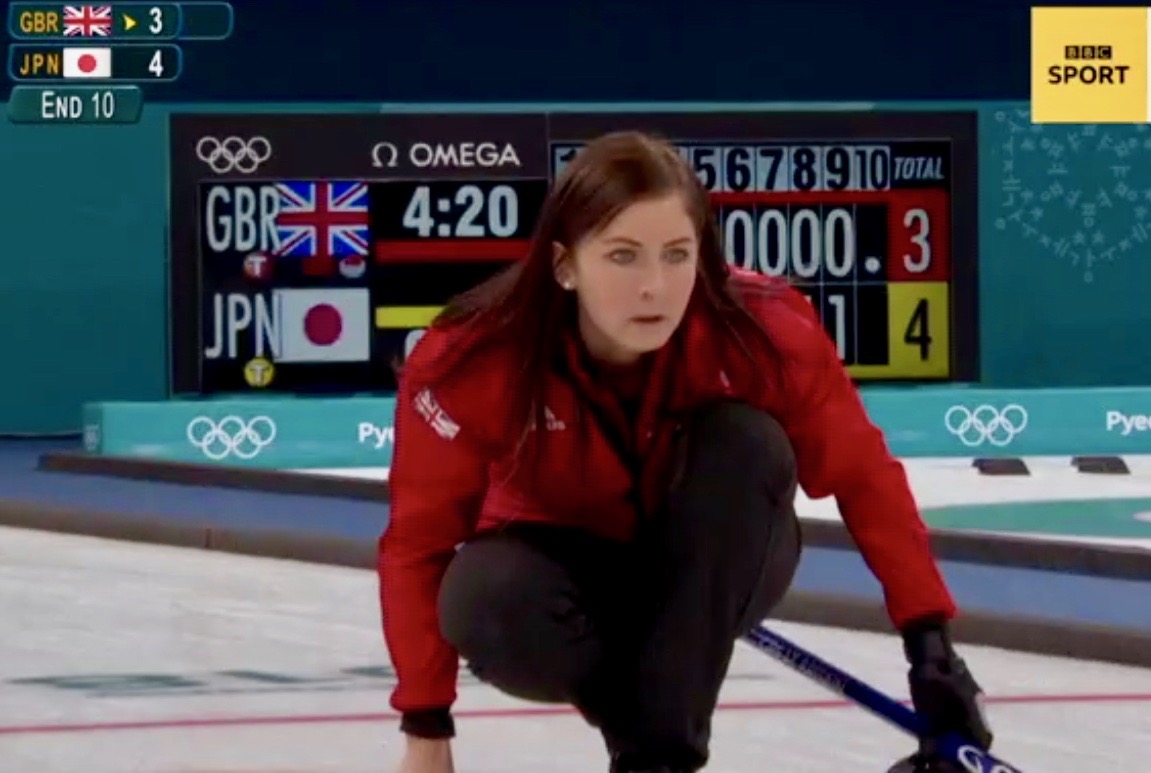
A notable exception is curling. One of its refreshing aspects was the way that opponents always agreed the result of an end - no disputing. It was grown up behaviour. (A shame we didn't come away with a medal, but I did admire Eve Muirhead going for broke with her last stone!)

So what’s wrong with it? I don’t mind the use of photo-finishes when the human eye really isn’t fast enough to separate out bicycle wheels, horses' noses or skate tips crossing the finishing line – though if they’re that close, what’s wrong with equal first? However my real objection is the use of video replays in sports’ competitions of any sort. And it’s not because of the interruption of the flow of play, even if that is annoying enough. It’s because it infantilises sport. It demeans referees and umpires (depending on your sport). Instead of the man or woman on the spot being the final arbiter, technology is appealed to. Human beings are judged by machines.

We need to re-establish human trust into sport. Of course your referee may make mistakes, but that’s life. There used to be an adage, “The referee’s decision is final.” It wasn’t a bad one. There was another, “You win some, you lose some.” It was a healthy attitude, more healthy, I’d suggest, than the present custom of arguing the toss whenever the decision goes against you. There’s little more ugly than a grown man representing his country confronting the referee when he’s judged to have committed a foul. The “You cannot be serious!” merchants of the sports arena need to grow up themselves. Umpires and referees are selected for their impartiality. They deserve to be respected more, not placed at the mercy of machines. Sport would become a great deal more enjoyable were its participants (and their teams and supporters) to accept decisions made by those who in fact carry out a no-win job with extraordinary skill and integrity, without resort to wretched machines.

I'm told that the amount of money that is now tied up in professional sport is the driver behind the technological juggernaut. Maybe, but at least in the field let’s have less, not more, technology and more, not less, trust in people.

Friday, 23 February 2018

Plus ça change


Keir Hardie was a fascinating and impressive character, as I’ve discovered from his biography by Bob Holman. It’s little wonder that he is often referred to as a hero. A brief account of his life by Professor Holman, https://keirhardiesociety.co.uk/about-keir-hardie/, begins, “Born illegitimate and in poverty in 1856 and working in the coal mines from the age of ten. Yet Keir Hardie was to become the main founder of the Labour Party. An active trade unionist, he was sacked by the pit owners and became a trade union official, living in Cumnock with his wife, Lillee, where he was active in a local church.” Near his conclusion he writes, “He should… be praised for the life he led. He put principles into individual practice. He lived modestly and never used politics to enrich himself. He wanted no honours. He spent little time with social elites and always kept in touch with ordinary people. We need his like today.”

Which perhaps goes some way to explaining why he was generally loathed by the press, controlled then as generally now by very rich press “barons”. He continually attacked vested interests. He considered the exploitation of workers as a flagrant violation of the Gospel imperative to love your neighbour as yourself and wasn’t afraid to say so. When he died, only his local newspaper in Scotland honoured his achievements. The Times  wrote: “It was Mr Hardie’s misfortune that he inherited more than an average share of Scottish dourness. The spirit of compromise played but a minor part in his activities. This negative much of his work for the party for which he worked, while his imagination led him astray on many vital points….`’  

Maybe the press proprietors’ antipathy to him was unsurprising. He had little time for them. He moved a private members’ bill in the Commons in 1901, which blamed poverty on private ownership and called for “a Socialist Commonwealth founded upon the common ownership of land and capital, production for use not for profit, and equality of opportunity for every citizen.” “This House and British nation,” he said, “know to their cost the danger which comes from allowing men to grow rich and permitting them to use their wealth to corrupt the press, to silence the pulpit, to degrade our national life, and to bring shame and reproach on a great people in order that a few unscrupulous scoundrels might be able to add to their ill-gotten gains.” That would be a powerful enough sentiment to express today. I imagine it was even more unpalatable then.

This week we’ve had the strange case of The Sun newspaper (along with The Daily Telegraph, The Daily Mail and The Daily Express, which all ran the same story) falling silent after breaking a scoop story about Jeremy Corbyn having been a Czechoslovakian spy in the 1980s. It proved groundless, but gave Conservative politicians licence to attack the man they most fear. However the newspapers have dropped the story – for the time being at least.HH
Hoho

Meanwhile the Deputy Labour leader, Tom Watson, in The Independent newspaper, “argued the new attacks on Mr Corbyn fit a pattern going back decades, which has also seen the same papers attack Ed Miliband’s father as ‘the man who hated Britain’ and vilified Neil Kinnock.
“Mr Watson’s attack comes as Mr Corbyn was forced to threaten legal action against Ben Bradley, an MP and a vice chair of the Conservatives, who, after reading the newspaper coverage, made claims on social media that the Labour leader had ‘sold British secrets’ to communist spies.
“In his article, Mr Watson writes: ‘Newspaper proprietors in this country abuse their power.
‘It’s a unique kind of self-harm for a newspaper to print a story they know is poorly sourced, decide to run it regardless because it suits their political agenda, and pass it off as news.’”

I suspect the same motivation lies behind this dislike of Mr Corbyn as lay behind the attacks on Keir Hardie over 100 years ago. He didn’t seek their favour or mince his words, unlike the majority of those in power in recent times. And in the last two election manifestoes Labour has committed to initiating Leveson Enquiry part 2, which they fear would place them under legal obligations rather than their own rather easy-going voluntary code. He is in their view a danger. What he certainly is not is a traitor, as some Tories were stupidly saying, as Andrew Neil ably demonstrated in his interview with Brexit minister, Steve Baker, on Wednesday – which is one of the best pieces of interviewing I have seen. “Surely the real scandal, Mr Baker, is not what Mr Corbyn has supposedly done, or not done; it’s the outright lies and disinformation which your fellow Tories are spreading. That’s the real scandal, isn’t it?” I urge you to watch the four minutes of eye-opening viewing. And where it started was with an under-researched malicious piece of journalism in one of our tabloid newspapers.

Tuesday, 20 February 2018

Charity concerns


Charities are suddenly under fire. Any misdemeanour (and there clearly have been a number, charity workers being as human as the rest of us with less altruistic occupations) is now leapt upon with the pharisaic zeal which seems to be the mark of this age. However I wonder whether charity workers are any more prone to sexual exploitation than, say, businessmen. Are the media up in indignant arms over people at a sales’ conference in the developing world using and abusing local women and minors? I suspect it happens.

I understand that there is a peculiar dissonance between the altruistic aims of an aid charity and such behaviour. Yet is there an element of foreign-aid bashing in the obsessive focus on a systemic failure in Oxfam? Is it a coincidence that it comes within weeks of the Oxfam report released at Davos, which pointed out “Eighty two percent of the wealth generated last year went to the richest one percent of the global population, while the 3.7 billion people who make up the poorest half of the world saw no increase in their wealth, according to a new Oxfam report released today”? Discrediting charities which speak uncomfortable truth to power would allow some very rich and powerful people to sleep more easily at night. It would also suit right-wing newspapers which campaign to reduce our country’s overseas aid budget of a mere 0.7% GDP. And of course politicians of an insular persuasion will use it as fuel to divert money from the ethical, and self-interested by the way, relief of our fellow human beings.

I trust that the overwhelming good performed by such charities will not be obscured by the fallibility of their human employees. We create enough misery throughout the world in one way or another. It would be an even bleaker place were charities such as Oxfam and Save the Children not to exist or were starved of support. It's tragic that 7000 donors have cancelled their subscriptions to Oxfam. Who will suffer? Not the donors.

Nevertheless, even before the Oxfam news, I had been thinking about the role of charities, maybe because I’d been reading Bob Holman’s biography of Keir Hardie (http://www.lionhudson.com/page/detail/?K=9780745953540). He famously had a contretemps with Lord Overtoun, the Scottish industrialist whose much lauded philanthropy did not extend to his own employees.

I wrote to a theologian I know:
“Do you think churches setting up things like food-banks, homelessness shelters and street pastors is a good thing? 
“What I’m wondering is this. Were they not there, the true effects of government cuts in the name of financial responsibility would be acutely obvious and politically intolerable. As it is, the churches’ benevolence mitigates the effects of cuts in benefits and cuts to policing, and the vulnerable suffer, so that the well-off can remain comfortable. ‘Let them make do with sticking plasters.’
“It suddenly occurred to me.”

He sagely replied, “There is a danger in providing permanent sticking plasters instead of sorting the problem; but I don't see how Christians can pass by on the other side when the man is lying there mugged. But if it becomes an excuse for not pushing on the political structural fronts, eg working for proper policing on the Jerusalem-Jericho road or a health service that is meeting the needs, then we are at fault.... And that easily happens with conservatives.”

As far as I know, this theologian is not a socialist. Keir Hardie (1856-1915) who shared his Christian faith certainly was. He was, as Professor Holman suggests, possibly Labour’s greatest hero. Hardie rightly wrote, “Poverty can never be remedied by charity, but only by justice.” That was his political motivation. “The Labour Party stands for something which no other party does. Its aim is the abolition of poverty.” What a great aim! Oxfam's vision is "We won't live with poverty". Little wonder some people would like to undermine it.

Wednesday, 7 February 2018

Tweeting truth


I want to gripe again. My question is this. When do you ever hear what a politician really thinks?
 
Cartoon from Cartoon Stock
Maybe Donald Trump’s tweets are genuinely his thoughts. But if they are, then where do his more reasonable speeches come from? Are they really what he thinks and wants? Or are they what his speech-writers reckon will go down well with his audience at the time? Certainly his minders minded when in the early days he strayed off-script. And it’s probable that they now also try to vet his tweets, with limited success it must be said.

Meanwhile on our side of the pond it’s fairly obvious that our prime ministers don’t have the time to write the host of speeches they choose to deliver every week. One imagines that their party minders, the ones who pre-brief on coming speeches, suggest a promising topic as well as a crowd or party pleasing line; the PM chooses it and the speech writers produce it for her to deliver. And so we have the curious phenomenon of shifting policy arguments stated with all the conviction of a university debating chamber.

How I long for a politician whom one knows where they stand! And I don’t think I am alone. I suspect the perceived straightforwardness of Jeremy Corbyn accounted for the unexpected success of Labour at the last general election, and the beautifully articulate rigidity of the honourable member for the 18th century, Jacob Rees-Mogg, explains similarly his unaccountable and regrettable popularity among certain circles. Even the wily Father of the House, Ken Clarke, remains consistent  at the expense of his colleagues falling asleep.

There is, it seems, a struggle between politicians of convenience and politicians on conviction. Sadly often those with political aspirations start off with conviction but the pressures of expediency and the pursuit of power soon squeeze them into the mould of convenience.

It would be nice to believe that a good interviewer might elicit the truth from a politician. But of course the party machines have that awful possibility covered as well. Their representatives are intensively trained in interview technique, which we recognise all too well. It seems to boil down to, “Don’t answer the question asked. Have a sound bite and repeat it at every opportunity. Above all, stay on message.” In my view, the adversarial nature of the interviewing game has done nothing for honest politics. Belligerent interviewers such as John Humphrys simply produce defensive politicians.
 
E B Herbert, The Fox Hunt
Let me add one thing. I’m not blaming politicians more than anyone else. The rest of us have a mob mentality, like a pack of hounds led by journalists on their high horses, seeking out any weaknesses and hunting down our prey to their political extinction. We relish the chase. Perhaps if we respected our politicians more, who are entrusted with a huge responsibility on our behalf, we might receive the respect of their honesty in return.

So, meanwhile, are Donald Trump’s tweets the nearest we will get to knowing the honest views of a politician? If this is as good as it gets, how sad.

Friday, 2 February 2018

Beguiling statistics


I’m not accustomed to watching BBC’s The One Show, but I did catch it on Wednesday this week, when there was an item on the charity Dentaid in Yorkshire town of Dewsbury. It mainly works overseas, but, as its website (https://www.dentaid.org/uk/) puts it, “It is a sad fact that many people in Britain are unable to access safe, affordable dental care. Although the NHS offers first class dental services, many vulnerable people aren’t registered with a dentist and only seek treatment when they are suffering pain.
“In some parts of the country there are long waiting lists for NHS dentists and people are developing dental problems while they are waiting for a place to become available.
“Dentaid is also aware that homeless people, those with a history of drug and alcohol abuse or patients with mental health problems can face obstacles when visiting a dental surgery.
“Furthermore, up to 40 per cent of children in the UK are not receiving any dental check-ups or oral health education.
Dentaid has a range of projects in the UK to tackle these problems.It offers free dental service to those who can’t get NHS treatment for one reason or another.” 


One of those was the mobile clinic visiting Dewsbury, treating around 200 people in a fortnight.
Photo from Dentaid's website; treatment in Dewsbury

This post isn’t about the multiple reasons, such as the cutting of school dental services and the push towards privatising health services, that have given rise to this. However it is about a passing remark made by Eddie Crouch, Vice Chair of the British Dental Association, being interviewed by Alex Jones and Matt Baker.

He stated, “Access to local NHS dentistry is a problem everywhere.” And so Alex Jones commented, with I assume a government statistic, “You know, there has been an increase in NHS dentists, 20%; so you would think that would improve things slightly. But not so?”

Eddie Crouch: “Well, what we’re talking about there is the global number of dentists actually in the NHS, but we’re not talking about the number working full-time in the NHS. That figure is irrelevant really. If the whole time numbers of dentists working in the NHS hasn’t increased, and in fact the funding hasn’t increased for a long time; so even if there were more dentists working in the NHS, they’re only working with the same amount of funding.”

He is of course right. Governments are fond of confounding criticism with statistics. Just watch Prime Minister’s Questions or listen to the Today programme. However one can select statistics to prove any case. Perhaps the most egregious example is to do with unemployment. The number of unemployed people has according to government figures been gratifyingly decreasing year by year. And yet oddly the average standard of living has also been falling and homelessness rising. One is therefore left with questions such as how many of the “employed” are working part-time, how many are on zero hours contracts, what sort of jobs are these “employed” working in and how many have been excluded from benefits by other means.

The important question is not about the statistics, but about the outcome. Mark Twain was reported as saying, “Figures often beguile me, particularly when I have the arranging of them myself; in which case the remark attributed to Disraeli would often apply with justice and force: ‘There are three kinds of lies: lies, damned lies, and statistics.’” I think he meant that statistics could be used to prove anything.  

It's an eloquent commentary on the current state of the NHS that desperate patients are being compelled to resort either to private firms - or to third-world charities.